
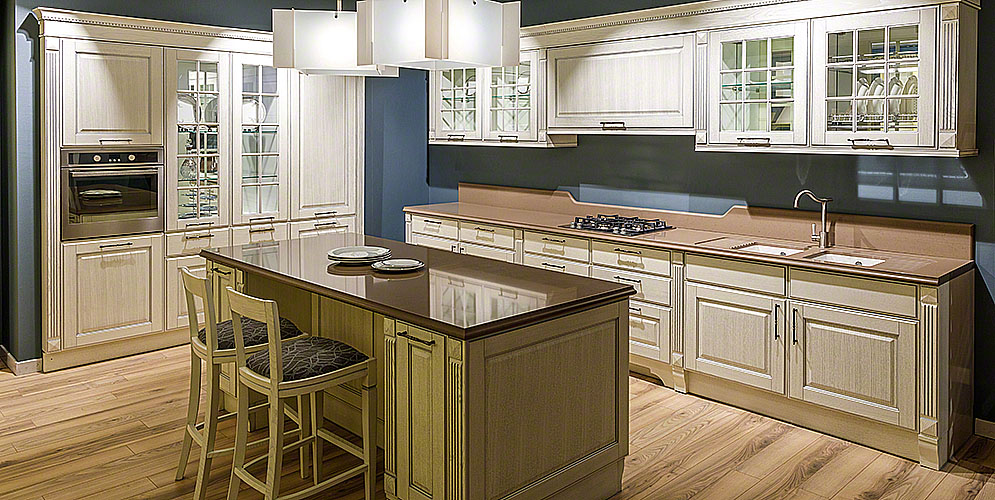
Framed Vs. Frameless Cabinets For Kitchens And Bathrooms
When choosing cabinets for your kitchen or bathroom, you will also need to consider their construction. There are two types of cabinet constructions: framed cabinets and frameless cabinets. Here is a comparison of these cabinet constructions before you proceed to check out 1951 cabinets.
Differences Between Framed And Frameless Cabinets
What Are They?
We will first explain what they are and why they are two individual cabinet constructing types.
Framed Cabinets
Framed cabinets have a couple of inches of a wood frame that you can see between the doors and drawers. They are actually around the cabinet boxes and become a part of the design and style of the cabinets. They are also called face-frame cabinets, traditional cabinets, in-frame cabinets, and American-style cabinets.
Frameless Cabinets
Frameless cabinets offer a modern construction style where the doors don’t have any face frame between them. You only see the doors and a tiny space between them. These cabinets are also known as Euro cabinets, full-access cabinets, and modern cabinets.
Style And Appearance
Framed Cabinets
They are also called traditional cabinets, so they offer a traditional look. They are mostly used for traditional and transitional kitchens and bathrooms. However, you can also integrate them in modern kitchens with the help of a designer.
Frameless Cabinets
Their other name is modern cabinets, so they are commonly seen in modern kitchens and bathrooms. You can also use them for your transitional and traditional spaces, but the details matter so don’t do it without an expert.
Materials, Finishes, And Colors
Any cabinet box and door material can be used for either of the cabinet construction methods. So, when it comes to materials, they are totally equal. The same is true for cabinet finishes and colors.
Door Styles
Framed Cabinets
Framed cabinets allow a wider range of door styles to choose from, even though some door styles can be used for both cabinet types. You can use shaker, raised panel, recessed panel, partial overlay, full overlay, shaker, beadboard, and glass door styles.
Frameless Cabinets
There are fewer door styles for frameless cabinets. You can pick from full overlay, shaker, slab, glass, and handle-less door styles.
Storage
Framed Cabinets
Framed cabinets have slightly less storage space than frameless cabinets because there is a layer of the face-frame. However, the difference is slight.
Frameless Cabinets
Frameless cabinets get the advantage of no face-frame here, as they are slightly more spacious than framed cabinets of the same dimensions. So, if you’re short on space and want to make the most of what you have, then frameless cabinets may be a good option for your kitchen or bathroom remodel. But read the entire blog because they have a few cons as well.
Durability
You can use any material with either of the options, so material durability is identical in both cabinet construction styles. However, the construction itself also has a bit of an impact on the durability of the cabinets, which can make a difference.
Framed Cabinets
They are considered more durable because they have an added layer of the face-frame that acts as a support, apart from being a style choice. So, if the box is damaged or the doors are, they may not give up too early because of the face-frame.
Frameless Cabinets
Frameless cabinets are slightly less durable as they don’t have a face-frame layer on top of the cabinet boxes. However, the cabinet box of frameless cabinets is usually thicker than that of framed options, so this fact can make up for the absence of the wood frame, to an extent. Consult a Timberlake cabinets dealer MD for durable frameless and framed cabinets.
Hinges
Framed Cabinets
The hinges are attached to the frame, which is made of hardwood. This is the traditional and safer location and material for hinges. So, framed cabinets may not need too frequent hinge adjustments or repairs.
Frameless Cabinets
In this type of cabinet construction, there is no face-frame, so the hinges are attached to the side panel, which is the outer, side layer on top of the cabinet box to match the doors. The type of hinges and the installation make them invisible from the outside.
This method is modern but is not considered as safe as placing hinges on the face-frame. It’s because the face-frame is made of hardwood and the side panel is made of MDF or particleboard, and hinges work better on hardwood. So, the hinges on the side panel may need frequent adjustments or repairs.
Installation
Framed Cabinets
Framed cabinets are easier to install. The face frame is on top of the box, so you can hide small alignment problems without it impacting the aesthetics. This means even if the walls are not flat, you can use the face frame as a mask too. And it will perform its role of aesthetics and support.
Because of this, you can also DIY the installation of framed cabinets if you’re handy with this stuff. Framed cabinets are considered great for older homes and spaces where you don’t have perfect walls, or when you want to DIY the project. Another installation benefit of framed cabinets is that they are quicker to install.
Frameless Cabinets
These cabinets are difficult to install. You need precise measurements because the box of the cabinet will be visible, as there is no wood frame. So, if the box is misaligned, it will show and appear bad.
For installing frameless cabinets, you also need perfect measurements for the doors and drawers so they close without being too far apart or there will be a small space between them that will be wider than it should be.
Therefore, frameless cabinets are not DIY-friendly and you should always hire a kitchen or bathroom remodeler for their installation.
Cost
Framed Cabinets
Framed cabinets have an additional layer of wood frame, so you spend extra on it, but the overall cost of the material is still lower than that of frameless cabinets because you don’t need thick boxes. Moreover, as the installation is forgiving, the labor cost is lower as well.
Frameless Cabinets
You don’t have the face frame and you may think that this will save costs, but it doesn’t. The reason is that the absence of the wood frame creates the need for a sturdier and thicker box. So, the box’s cost increases because you may need thick plywood. So, frameless cabinets are overall costlier, including the labor cost.
Repairs
Framed Cabinets
Firstly, the construction of framed cabinets and the hinges’ location make them sturdier. So, the need for repairs is low. And when the cabinet does need repair, it’s easier because you have a sturdy frame as a base, which can take repairs and also because the designs are simpler.
Frameless Cabinets
Frameless cabinets may need repair more frequently because the hinges are attached to the side panel and can get loose or pull out. Simpler hinge problems are easy to fix, but if the side panel sustains damage, you may need to replace it as well.
Furthermore, frameless cabinets don’t have a frame, so there is no layer of protection from moisture. The box or the cabinet edges can sag or get damaged, which will need to be dealt with by an expert.
Conclusion
Concluding, framed and frameless cabinets have a few differences, but the major differences are the aesthetics and the cost. Framed cabinets give a traditional look because of the face-frame and are less costly, while frameless cabinets offer a modern appearance and are costlier. Contact a 1951 cabinetry dealer MD to choose cabinets for your kitchen or bathroom.